
 Skip to content
If losing weight feels different after 40, there may be a reason.
The strategies that worked in your 20s and 30s may not produce the same results as you get older. Changes in muscle mass, activity, sleep, hormones, appetite, and energy requirements can all affect body composition and make maintaining—or losing—weight more challenging.
For women, perimenopause and menopause can add another layer of complexity. Men also experience age-related changes in muscle mass, body composition, and metabolic health.
But turning 40 does not mean your metabolism suddenly stops working or that weight gain is inevitable.
At The Best Injector in Delray Beach, Florida, our approach to medical weight loss after 40 focuses on understanding what has changed and creating an individualized strategy around your current body—not trying to force the same methods that worked 15 years ago.
We provide medical weight management for patients throughout Delray Beach, Boca Raton, Boynton Beach, Highland Beach, and surrounding Palm Beach County communities.
There isn’t one single reason weight loss may become more difficult after 40.
Instead, several changes can occur at approximately the same time.
You may gradually lose skeletal muscle if you aren’t actively working to maintain it. Your overall activity may decrease. Sleep may become less consistent. Hormonal changes can influence appetite and where body fat is distributed.
At the same time, your daily energy requirements may be lower than they were when you were younger.
The result?
You can continue eating and exercising similarly to the way you always have and still notice your body changing.
That’s why the answer isn’t necessarily another restrictive diet.
First, it helps to understand what has changed.
This is more nuanced than most weight loss advice makes it sound.
Your metabolism doesn’t suddenly collapse on your 40th birthday.
However, changes in body composition, particularly loss of skeletal muscle, along with changes in activity and energy expenditure, can affect how many calories your body uses.
Muscle is metabolically active tissue, and maintaining lean mass becomes increasingly important as we age.
This is one reason our approach to medical weight management doesn’t focus exclusively on making the number on the scale as low as possible.
We want to consider what you’re losing, not simply how much you’re losing.
One of the biggest mistakes people can make during weight loss after 40 is focusing exclusively on rapid weight reduction.
Losing weight and losing fat are not necessarily the same thing.
When total body weight decreases, some lean tissue can be lost along with body fat. The more aggressive the weight-loss strategy, the more important it becomes to think about preserving muscle.
Skeletal muscle contributes to:
For many patients, adequate protein intake and resistance training should therefore be part of a comprehensive weight-management strategy.
The goal isn’t simply to become smaller.
The goal is to improve the composition of the body you’re going to live in for the next several decades.
Women can experience particularly noticeable changes in body composition during their 40s.
Perimenopause may begin years before the final menstrual period, and fluctuations in reproductive hormones can occur during this transition.
Women commonly report changes in sleep, energy, appetite, and where they carry body fat.
One of the most frustrating changes is increased fat around the abdomen.
This does not mean that estrogen is solely responsible for weight gain or that every woman over 40 needs hormone treatment.
Body weight and body composition are influenced by multiple factors, including nutrition, physical activity, muscle mass, sleep, genetics, medications, medical conditions, and hormonal changes.
The appropriate strategy should therefore be individualized.
Many women notice that their body begins storing fat differently during perimenopause and menopause.
Even women whose overall weight has not changed dramatically may notice increased abdominal fat or a change in their waistline.
Changes in estrogen during the menopausal transition can influence body-fat distribution, while aging, activity, sleep, and loss of lean muscle can contribute to overall changes in body composition.
This distinction is important.
The solution isn’t necessarily to eat dramatically less.
For many women, a better strategy involves prioritizing protein, resistance training, overall nutrition, sleep, appropriate calorie intake, and—when medically appropriate—additional treatment for overweight or obesity.
Men experience age-related body-composition changes as well.
Declining activity, gradual loss of skeletal muscle, increased visceral abdominal fat, poor sleep, insulin resistance, dietary changes, and other medical factors can all contribute to weight gain.
Rather than assuming every change is caused by testosterone, it is important to evaluate the complete clinical picture.
For men struggling with excess weight after 40, medical weight management can provide a structured approach that considers appetite, nutrition, activity, body composition, medications, health history, and appropriate treatment options.
Abdominal fat is one of the most common concerns we hear from adults over 40.
There are different types of abdominal fat.
Subcutaneous fat sits beneath the skin.
Visceral fat accumulates deeper in the abdomen around internal organs.
Higher amounts of visceral fat are associated with increased cardiometabolic risk, which is why improving body composition can have implications beyond appearance.
Genetics, aging, physical activity, diet, sleep, insulin sensitivity, hormonal changes, and total body fat can all influence abdominal fat.
The goal of medical weight management isn’t to spot-reduce one area.
It’s to improve overall body composition and metabolic health.
A bathroom scale gives you one piece of information:
Total body weight.
It cannot tell you how much of that weight is body fat versus skeletal muscle or body water.
Consider two people who each lose 20 pounds.
One loses predominantly fat while preserving most of their muscle.
The other loses significant amounts of both fat and lean tissue.
The scale says they achieved the same result.
Their body composition says otherwise.
This becomes increasingly important after 40, when preserving muscle should be a priority.
For some adults, improving nutrition, increasing physical activity, prioritizing resistance training, and improving sleep may be enough to achieve their goals.
Others may meet medical criteria for additional treatment.
Medical weight loss allows a healthcare provider to evaluate your history, current weight, previous weight-loss attempts, medications, health conditions, appetite, lifestyle, and goals before determining an appropriate strategy.
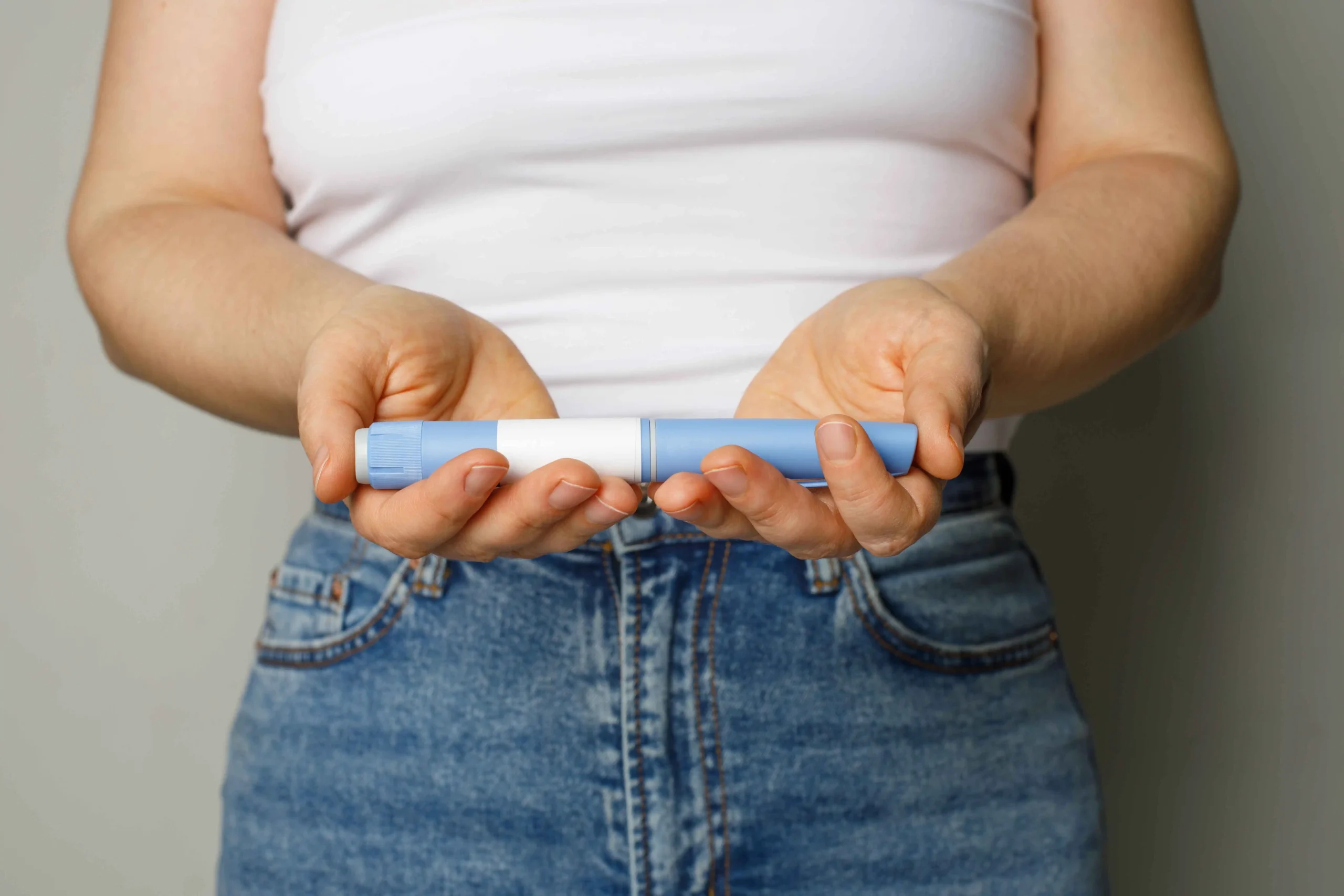
For eligible patients, treatment may include prescription weight-management medications such as semaglutide or tirzepatide.
Medication isn’t appropriate for everyone.
But for the right patient, it can be a valuable medical tool.
Semaglutide is a GLP-1 receptor agonist that affects pathways involved in appetite, satiety, gastric emptying, and glucose regulation.
For appropriate candidates, semaglutide may help reduce hunger and allow patients to feel satisfied with smaller portions.
This can make maintaining the energy deficit necessary for weight loss more manageable.
However, taking semaglutide does not eliminate the importance of nutrition, physical activity, protein intake, or muscle preservation.
In fact, because appetite and overall food intake may decrease substantially during GLP-1 treatment, the quality of the nutrition you do consume becomes particularly important.
Tirzepatide targets both GIP and GLP-1 receptors and is another medication that may be considered for appropriate patients requiring medical treatment for weight management.
As with semaglutide, treatment should be individualized.
The decision to use tirzepatide should take into account medical history, eligibility, contraindications, previous treatment, side effects, goals, and individual response.
The objective isn’t simply to use the strongest medication or reach the highest possible dose.
It’s to find an appropriate treatment strategy for the individual patient.
Patients frequently ask whether semaglutide or tirzepatide is “better.”
There isn’t one answer for everyone.
The medications work differently, and individual response varies.
The appropriate choice depends on factors including:
Age alone does not determine which medication is appropriate.
A medical evaluation does.
Muscle preservation deserves particular attention when significant weight is being lost.
GLP-1 medications can substantially reduce appetite. If that results in very low food intake, patients may have difficulty consuming adequate protein and other nutrients.
Weight loss itself can also include loss of lean tissue.
That does not mean GLP-1 medications inherently “destroy muscle.”
It means that muscle preservation should be considered during any significant weight-loss intervention.
For many patients, this means prioritizing adequate nutrition, sufficient protein, and resistance training while avoiding the mentality that eating as little as possible is the goal.
A calorie deficit is necessary for fat loss.
But that doesn’t mean increasingly aggressive calorie restriction is always the smartest strategy.
Extremely restrictive diets can be difficult to sustain and can make adequate protein and nutrient intake more difficult.
They may also contribute to greater loss of lean tissue and make long-term adherence challenging.
The goal should be to create an appropriate energy deficit while maintaining adequate nutrition and supporting lean muscle.
That’s very different from simply trying to eat the smallest amount of food possible.
Cardiovascular exercise has important health benefits and can absolutely be part of a weight-management program.
But adults over 40 should also consider the importance of resistance training.
Strength training provides a stimulus to maintain or build skeletal muscle.
That becomes particularly important during weight loss.
You don’t need to become a bodybuilder.
But consistently challenging your muscles through appropriate resistance exercise can play an important role in maintaining strength and improving body composition as you age.
Sleep and stress matter, but not because one bad night’s sleep suddenly makes fat loss impossible.
Poor sleep can affect appetite, energy, food choices, recovery, and physical activity.
Chronic stress can also influence sleep, eating patterns, activity, and adherence to a weight-management plan.
For many adults over 40, these factors coexist with demanding careers, children, travel, and other responsibilities.
A realistic weight-management plan has to work within someone’s actual life.
Otherwise, it isn’t much of a plan.
Hormone therapy and weight-loss treatment are not interchangeable.
For women experiencing symptoms associated with menopause, menopausal hormone therapy may be appropriate following individualized medical evaluation.
Men with symptoms and laboratory evidence of testosterone deficiency may also require appropriate medical assessment.
But hormones should not automatically be prescribed simply because someone over 40 has gained weight.
Likewise, hormone replacement should not be marketed as a universal weight-loss treatment.
If hormonal symptoms or another medical condition may be contributing to changes in weight or body composition, appropriate evaluation is warranted.
Weight loss rarely occurs in a perfectly straight line.
As you lose weight, your energy requirements change. Activity may change. Hunger may change. Your body adapts to its smaller size.
Eventually, the strategy that initially produced weight loss may need to be reassessed.
If you’re taking semaglutide or tirzepatide, a plateau also does not automatically mean you need a higher dose.
Before changing treatment, it can be useful to evaluate appetite, food intake, protein, activity, resistance training, body composition, medication response, sleep, and your current goal.
A plateau is information.
It isn’t automatically treatment failure.
At The Best Injector in Delray Beach, Florida, we provide individualized medical weight management for adults who want an evidence-informed approach to losing weight and improving body composition.
Treatment is led by Lianne Hahn, PA-C, a board-certified Physician Assistant with more than a decade of experience in medicine, aesthetics, and patient care.
For eligible patients, medical weight management may include semaglutide, tirzepatide, GLP-1 treatment, body composition assessment, and ongoing medical oversight.
Rather than using the same protocol for every patient, treatment is individualized according to medical history, goals, response, and progress.
For patients searching for medical weight loss after 40 in Boca Raton, The Best Injector is conveniently located nearby in Delray Beach, Florida.
We serve patients throughout Boca Raton and southern Palm Beach County who are interested in individualized, medically supervised weight management.
Whether you’re navigating weight changes during your 40s, struggling with abdominal fat, experiencing a weight-loss plateau, or considering semaglutide or tirzepatide near Boca Raton, treatment begins with determining what is medically appropriate for you.
Our Delray Beach office also serves patients from Boynton Beach, Highland Beach, Gulf Stream, and surrounding Palm Beach County communities.
Your energy requirements, activity level, muscle mass, sleep, hormones, and body composition may have changed even if your diet hasn’t changed significantly. Weight gain is usually multifactorial rather than the result of one specific hormone or metabolic problem.
It can be. Changes in muscle mass, activity, energy requirements, sleep, and—for women—the menopausal transition can affect weight and body composition. However, meaningful fat loss after 40 is absolutely possible.
Abdominal fat can be influenced by overall weight gain, genetics, age, activity, insulin sensitivity, sleep, and hormonal changes. Women may also experience changes in body-fat distribution during the menopausal transition.
Semaglutide may be an option for adults who meet appropriate medical criteria for pharmacologic weight management. It is not appropriate for everyone, and candidacy should be determined through medical evaluation.
For appropriate candidates, tirzepatide may be used as part of a medically supervised weight-management strategy. Individual eligibility, contraindications, health history, response, and treatment goals should be evaluated.
Neither medication is universally better. The appropriate treatment depends on the individual patient’s medical history, eligibility, previous treatment, goals, tolerance, and response.
The menopausal transition can contribute to changes in body composition and body-fat distribution. Aging, activity, muscle mass, sleep, nutrition, and other factors also play important roles.
No. Hormone replacement therapy is not required for weight loss and should not automatically be prescribed because someone has gained weight after 40. Hormone therapy may be appropriate for certain patients based on symptoms, medical history, risks, and individualized evaluation.
Adequate nutrition, appropriate protein intake, and resistance training are important considerations for preserving lean muscle during weight loss. Individual recommendations depend on your health, body composition, activity, and treatment plan.
The Best Injector is located in Delray Beach, Florida, convenient to Boca Raton and surrounding Palm Beach County communities. We provide individualized medical weight management and, for appropriate candidates, treatment that may include semaglutide or tirzepatide.
Your body at 40, 45, or 50 isn’t necessarily going to respond exactly the way it did at 25.
That doesn’t mean you need to accept unwanted weight gain.
And it doesn’t mean the answer is to eat almost nothing.
It means your strategy may need to evolve.
At The Best Injector in Delray Beach, medical weight management focuses on individualized treatment, sustainable fat loss, and preserving the muscle and body composition that become increasingly important with age.
If you’re struggling with weight loss after 40, perimenopause weight changes, a GLP-1 weight loss plateau, or you’re considering semaglutide or tirzepatide, schedule a medical weight loss consultation to determine what approach may be appropriate for you.
The Best Injector serves patients throughout Delray Beach, Boca Raton, Boynton Beach, Highland Beach, Gulf Stream, and surrounding Palm Beach County.
Lianne Hahn, PA-C is an NCCPA board-certified Physician Assistant and founder of The Best Injector, a boutique medical aesthetics and wellness practice in Delray Beach, Florida. With more than 13 years of clinical experience across aesthetics, dermatology, primary care, medical weight management, and wellness, Lianne combines advanced clinical knowledge with an individualized approach to patient care.
At The Best Injector, Lianne personally evaluates and treats patients from Delray Beach, Boca Raton, Palm Beach County, and throughout South Florida. Her practice offers advanced injectable aesthetics, facial balancing, medical weight management, GLP-1 treatment when clinically appropriate, InBody 570 body composition analysis, microneedling, regenerative treatments, and personalized wellness services.
Lianne’s approach emphasizes appropriate patient selection, individualized treatment planning, natural-looking aesthetic outcomes, and evidence-informed medical care rather than one-size-fits-all treatment protocols.
Author & Medical Reviewer: Lianne Hahn, PA-C
Credentials: NCCPA Board-Certified Physician Assistant
Clinical Experience: 13+ Years
Practice: The Best Injector | Delray Beach, Florida
Serving: Delray Beach, Boca Raton & South Florida
If you’re considering aesthetic treatment, medical weight management, body composition analysis, or wellness services in Delray Beach or Boca Raton, schedule a personalized consultation with Lianne Hahn, PA-C at The Best Injector to determine which treatment options may be appropriate for your individual goals.
This article is intended for educational purposes only and does not replace individualized medical evaluation, diagnosis, or treatment. Treatment eligibility, recommendations, risks, and expected outcomes vary by patient.