
 Skip to content
Interest in peptide therapy has increased significantly, particularly among adults looking for options related to body composition, recovery, performance, and age-related changes.
Two peptides frequently discussed together are CJC-1295 and ipamorelin.
Both interact with pathways involved in growth hormone (GH) signaling, but they work differently—and the evidence, regulatory status, potential benefits, and potential risks deserve a more nuanced discussion than peptide therapy often receives online.
At The Best Injector in Delray Beach, Florida, our approach to peptide therapy begins with medical evaluation and informed decision-making rather than assuming that every trending peptide is appropriate for every patient.
We serve patients throughout Delray Beach, Boca Raton, Boynton Beach, Highland Beach, Gulf Stream, and surrounding Palm Beach County communities who are interested in learning more about medically supervised peptide therapy.
Ipamorelin is a synthetic peptide that acts as a growth hormone secretagogue.
It interacts with the growth hormone secretagogue receptor (GHSR), a receptor involved in signaling the pituitary gland to release growth hormone.
Unlike administering exogenous human growth hormone directly, a growth hormone secretagogue works by stimulating endogenous GH release.
That distinction is one reason ipamorelin has generated interest in longevity, wellness, performance, and body-composition settings.
However, interest in a compound should not be confused with established clinical benefit.
Ipamorelin is not FDA-approved, and high-quality human evidence supporting many of the wellness and anti-aging benefits promoted online remains limited.
CJC-1295 is a synthetic analog of growth hormone-releasing hormone (GHRH).
GHRH is produced naturally by the hypothalamus and signals the pituitary gland to release growth hormone.
Human research has demonstrated that CJC-1295 can increase circulating GH and IGF-1 concentrations.
However, demonstrating an increase in a laboratory marker is different from demonstrating that a treatment improves longevity, body composition, sleep, recovery, or other clinical outcomes.
This distinction is particularly important when evaluating peptide therapy.
CJC-1295 and ipamorelin influence the GH axis through different signaling mechanisms.
CJC-1295 acts through the GHRH pathway, while ipamorelin acts through the growth hormone secretagogue receptor.
This complementary mechanism is why the two compounds are frequently discussed or marketed together.
The theoretical objective is to stimulate endogenous growth hormone secretion rather than administer growth hormone itself.
However, there is an important limitation:
The popularity of the CJC-1295/ipamorelin combination has outpaced the quality of clinical research evaluating the combination for wellness, anti-aging, body recomposition, or recovery.
Patients should understand that distinction before considering treatment.
Know more about CJC-1295 + Ipamorelin peptide therapy in Delray Beach.
CJC-1295 has been studied in humans.
Early randomized research in healthy adults demonstrated that subcutaneous CJC-1295 produced sustained, dose-dependent increases in growth hormone and IGF-1 concentrations.
That tells us that the peptide can influence the GH/IGF-1 axis.
It does not, however, establish that CJC-1295 produces all of the benefits commonly attributed to it online.
Large, long-term clinical trials demonstrating meaningful improvements in areas such as anti-aging, longevity, fat loss, muscle development, athletic recovery, or sleep are lacking.
This is why responsible peptide education needs to separate:
what is biologically plausible
from
what has actually been demonstrated in high-quality human clinical trials.
Ipamorelin has also been studied as a growth hormone secretagogue.
However, human clinical evidence for many of the reasons it is currently marketed in wellness medicine remains limited.
Claims that ipamorelin reliably improves sleep, accelerates fat loss, builds muscle, improves skin quality, or reverses aspects of aging should therefore be interpreted cautiously.
These outcomes have not been established to the same standard expected of an FDA-approved medication.
This is one of the most common questions surrounding growth hormone peptides.
Growth hormone and IGF-1 are involved in multiple physiological processes related to tissue growth and metabolism, so there is a biological rationale behind interest in GH-stimulating peptides for body composition.
But increasing GH or IGF-1 does not automatically mean someone will develop significant additional skeletal muscle.
Muscle development still depends heavily on:
CJC-1295 or ipamorelin should not be represented as substitutes for these fundamentals.
Growth hormone influences fat metabolism, which has contributed to interest in GH-related peptides for body recomposition.
However, CJC-1295 and ipamorelin are not FDA-approved weight loss medications.
Patients whose primary goal is treatment of overweight or obesity should be evaluated using established medical criteria and evidence-based weight-management options.
For eligible patients, FDA-approved weight-management medications may have substantially stronger clinical evidence supporting their use than experimental peptide protocols.
The appropriate treatment depends on the patient’s actual goal and medical history.
Growth hormone signaling plays a role in tissue physiology, which is why peptides affecting the GH axis are frequently promoted for exercise recovery.
However, claims that CJC-1295 and ipamorelin reliably accelerate injury healing or athletic recovery are not supported by robust clinical outcome trials.
Feeling better after a treatment and proving that a treatment objectively improves tissue healing are not the same thing.
Patients considering peptide therapy for recovery should understand the difference.
Growth hormone secretion is associated with sleep physiology, and natural GH secretion is closely related to slow-wave sleep.
That physiological relationship has led to claims that GH-related peptides improve sleep quality.
However, evidence that CJC-1295/ipamorelin therapy reliably improves clinically meaningful sleep outcomes remains limited.
Persistent fatigue or poor sleep should not automatically be attributed to declining growth hormone.
Sleep apnea, insomnia, medications, alcohol, stress, thyroid disease, hormonal changes, and other medical conditions can produce similar symptoms and may require evaluation.
Growth hormone secretion generally changes with aging.
But an age-associated physiological change is not automatically a disease requiring treatment.
This distinction matters because many wellness treatments are marketed around the idea of “restoring youthful levels.”
Higher is not necessarily healthier.
Growth hormone and IGF-1 participate in complex physiological signaling, and artificially altering those pathways may carry potential risks as well as theoretical benefits.
Treatment decisions should therefore be based on more than someone’s chronological age.
Patients researching CJC-1295 will frequently encounter references to CJC-1295 with DAC and CJC-1295 without DAC.
These terms are often used interchangeably online even though they do not necessarily describe equivalent compounds or pharmacokinetic behavior.
DAC refers to a Drug Affinity Complex designed to extend the duration of activity.
Products marketed as “CJC-1295 without DAC” are also frequently associated with terminology such as Modified GRF 1-29.
Patients should not assume that research involving one formulation automatically applies to another.
This is another reason sourcing and precise identification of the compound matter when interpreting peptide research.
No.
CJC-1295 and ipamorelin are not FDA-approved drugs.
That means they have not undergone the FDA approval process establishing safety and effectiveness for the wellness, anti-aging, body-composition, or recovery uses for which they are frequently marketed.
Compounded medications are also not FDA-approved.
FDA does not review compounded drugs for safety, effectiveness, or quality before they reach patients in the same way it reviews FDA-approved medications.
This does not mean that every compounded medication is inherently inappropriate.
Compounding has legitimate medical applications.
It does mean that patients deserve to understand the distinction.
Yes.
Peptide therapy should not be presented as risk-free simply because peptides interact with pathways that already exist in the body.
FDA has identified concerns regarding compounded CJC-1295 and ipamorelin, including limited clinical safety information and potential concerns related to immunogenicity and peptide impurities.
FDA has also identified serious adverse events associated with CJC-1295 and has stated that available clinical data are limited.
Potential effects associated with altering the GH/IGF-1 axis may also include issues related to:
Individual risk varies.
This is precisely why these compounds should not be purchased casually from websites selling “research peptides” for self-administration.
Searching for peptides online produces countless websites selling products labeled:
“For research use only.”
These products should not be assumed to be equivalent to medications obtained through legitimate medical channels.
Purity, potency, sterility, storage, contamination, and even whether the vial contains the substance stated on the label can become concerns when products are obtained outside regulated healthcare channels.
If peptide therapy is being considered, sourcing should be part of the clinical discussion—not an afterthought.
Because CJC-1295 and ipamorelin affect the GH/IGF-1 axis, medical history matters.
Patients should disclose their complete medical history, medications, previous cancers, metabolic conditions, endocrine disorders, pregnancy status, and other relevant conditions before considering any therapy that affects growth hormone signaling.
A symptom such as fatigue, difficulty maintaining muscle, poor recovery, or increased abdominal fat also does not automatically indicate a growth hormone problem.
Many medical and lifestyle factors can cause the same symptoms.
CJC-1295 and ipamorelin are not the same thing as recombinant human growth hormone (HGH).
HGH provides growth hormone exogenously.
CJC-1295 and ipamorelin influence signaling involved in endogenous growth hormone secretion.
While the mechanisms are different, both approaches interact with the GH/IGF-1 axis.
The fact that a peptide stimulates your body’s own signaling does not automatically make it risk-free.
“Natural” physiological signaling and “safe treatment” are not synonymous.
Peptides are a broad category, and different peptides act on entirely different biological pathways.
For example, semaglutide and tirzepatide are often casually referred to as peptides, but their clinical development, regulatory status, evidence base, indications, and mechanisms are very different from CJC-1295 and ipamorelin.
If someone’s primary goal is medical weight loss, the conversation should begin with evidence-based obesity treatment rather than assuming a GH-related peptide is the appropriate solution.
If the goal is body composition, recovery, or another wellness concern, that should be evaluated separately.
The peptide market is filled with aggressive claims.
Patients routinely encounter promises involving:
Some of these claims have plausible biological mechanisms behind them.
That is not the same as having strong clinical evidence proving the outcome.
Medical supervision should involve an honest discussion about what we know, what we don’t know, potential risks, alternatives, and whether treatment makes sense for the individual patient.
Patients searching for CJC-1295, ipamorelin, or peptide therapy in Delray Beach often encounter dramatically different information online.
At The Best Injector in Delray Beach, Florida, our approach begins with education and individualized medical evaluation.
Treatment is led by Lianne Hahn, PA-C, a board-certified Physician Assistant with more than a decade of experience in medicine, aesthetics, and patient care.
Our goal is not to present peptide therapy as a miracle treatment.
It’s to help patients understand available options, evidence, limitations, potential risks, and alternatives so they can make informed decisions about their care.
Patients interested in discussing whether CJC-1295 and Ipamorelin may be appropriate for their individual goals can learn more about CJC-1295 + Ipamorelin consultations at The Best Injector in Delray Beach.
The Best Injector is located in Delray Beach, Florida, conveniently located for patients throughout Boca Raton and southern Palm Beach County.
Patients searching for ipamorelin near Boca Raton, CJC-1295 near Boca Raton, or peptide therapy in Boca Ratoncan schedule a consultation at our Delray Beach office to discuss their goals and available treatment options.
We also serve patients from Boynton Beach, Highland Beach, Gulf Stream, and surrounding Palm Beach County communities.
Interested in learning whether CJC-1295 + Ipamorelin may be appropriate for you? Learn more about CJC-1295 + Ipamorelin peptide therapy in Delray Beach or schedule a personalized consultation at The Best Injector.
CJC-1295 is a synthetic analog of growth hormone-releasing hormone. Human studies have demonstrated its ability to increase GH and IGF-1 concentrations, although clinical evidence supporting many of its marketed wellness and anti-aging applications remains limited.
Ipamorelin is a growth hormone secretagogue that interacts with the growth hormone secretagogue receptor and can stimulate growth hormone release.
They influence growth hormone signaling through different mechanisms, which is why they are frequently discussed together. However, robust clinical outcome data specifically evaluating the combination for common wellness applications are limited.
No. Neither CJC-1295 nor ipamorelin is FDA-approved for anti-aging, body recomposition, recovery, or other wellness applications.
The available evidence is not sufficient to characterize these compounds as risk-free. FDA has identified safety concerns associated with compounded CJC-1295 and ipamorelin, and clinical data remain limited.
Ipamorelin is a growth hormone secretagogue and acts on receptors involved in stimulating GH secretion. However, changes in GH signaling do not establish that every proposed downstream wellness benefit will occur.
Human studies have demonstrated increases in GH and IGF-1 following administration of CJC-1295. The clinical significance of those changes depends on the context and should not be equated automatically with anti-aging or performance benefits.
They are not FDA-approved weight-loss medications, and evidence supporting their use specifically for weight reduction is limited. Patients seeking medical treatment for overweight or obesity should be evaluated for evidence-based weight-management options.
The Best Injector provides individualized consultations in Delray Beach, Florida for patients interested in learning about peptide therapy, potential alternatives, and whether a particular treatment is medically appropriate.
The Best Injector is located in Delray Beach, convenient to Boca Raton and surrounding Palm Beach County communities. Patients interested in peptide therapy can schedule an individualized consultation at our Delray Beach office.
Peptide therapy is evolving rapidly.
That makes it particularly important to separate promising mechanisms from proven clinical outcomes.
CJC-1295 and ipamorelin interact with pathways involved in growth hormone signaling, but neither compound should be marketed as a guaranteed solution for fat loss, muscle growth, sleep, recovery, or anti-aging.
At The Best Injector in Delray Beach, we believe patients deserve a more sophisticated conversation.
If you’re interested in CJC-1295, ipamorelin, growth hormone peptides, or peptide therapy, schedule a consultation to discuss your goals, medical history, evidence, potential risks, and available alternatives.
The Best Injector serves patients throughout Delray Beach, Boca Raton, Boynton Beach, Highland Beach, Gulf Stream, and surrounding Palm Beach County.
Lianne reviews potential benefits, limitations, medical history, and treatment eligibility before discussing CJC-1295 and ipamorelin within a personalized wellness consultation.
Lianne Hahn, PA-C is an NCCPA board-certified Physician Assistant and founder of The Best Injector, a boutique medical aesthetics and wellness practice in Delray Beach, Florida. With more than 13 years of clinical experience across aesthetics, dermatology, primary care, medical weight management, and wellness, Lianne combines advanced clinical knowledge with an individualized approach to patient care.
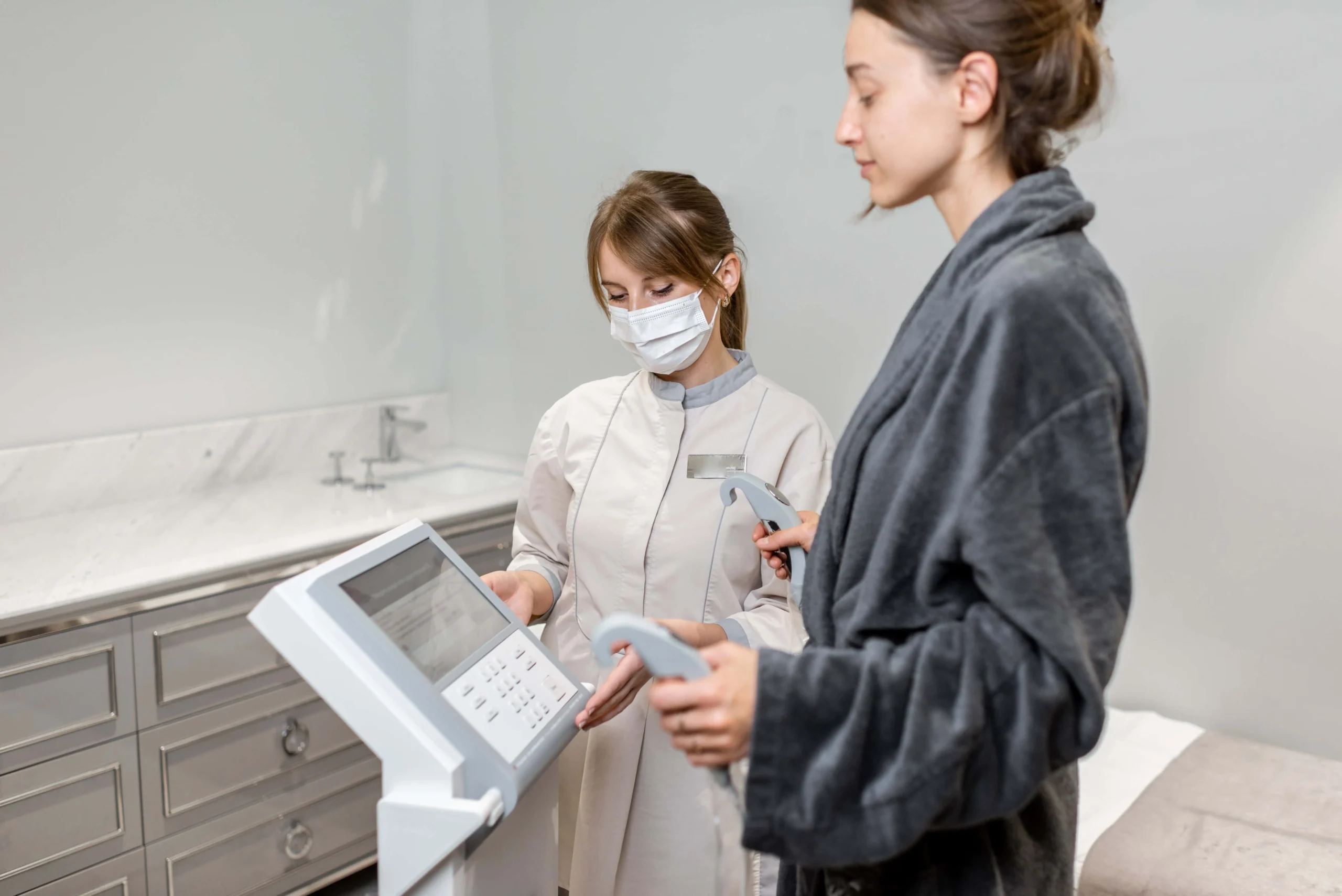
At The Best Injector, Lianne personally evaluates and treats patients from Delray Beach, Boca Raton, Palm Beach County, and throughout South Florida. Her practice offers advanced injectable aesthetics, facial balancing, medical weight management, GLP-1 treatment when clinically appropriate, InBody 570 body composition analysis, microneedling, regenerative treatments, and personalized wellness services.
Lianne’s approach emphasizes appropriate patient selection, individualized treatment planning, natural-looking aesthetic outcomes, and evidence-informed medical care rather than one-size-fits-all treatment protocols.
Author & Medical Reviewer: Lianne Hahn, PA-C
Credentials: NCCPA Board-Certified Physician Assistant
Clinical Experience: 13+ Years
Practice: The Best Injector | Delray Beach, Florida
Serving: Delray Beach, Boca Raton & South Florida
If you’re considering aesthetic treatment, medical weight management, body composition analysis, or wellness services in Delray Beach or Boca Raton, schedule a personalized consultation with Lianne Hahn, PA-C at The Best Injector to determine which treatment options may be appropriate for your individual goals.
This article is intended for educational purposes only and does not replace individualized medical evaluation, diagnosis, or treatment. Treatment eligibility, recommendations, risks, and expected outcomes vary by patient.