 Skip to content

Many people think weight is the best indicator of health.
In reality, two people can weigh exactly the same while having dramatically different amounts of body fat, muscle, and visceral fat.
That is why body composition analysis has become an increasingly important tool for monitoring health, fitness, and medical weight loss.
Two of the most common methods are:
Both provide valuable information, but they work differently and each offers unique advantages depending on your goals.
Understanding those differences can help you determine which option is most appropriate for your needs.
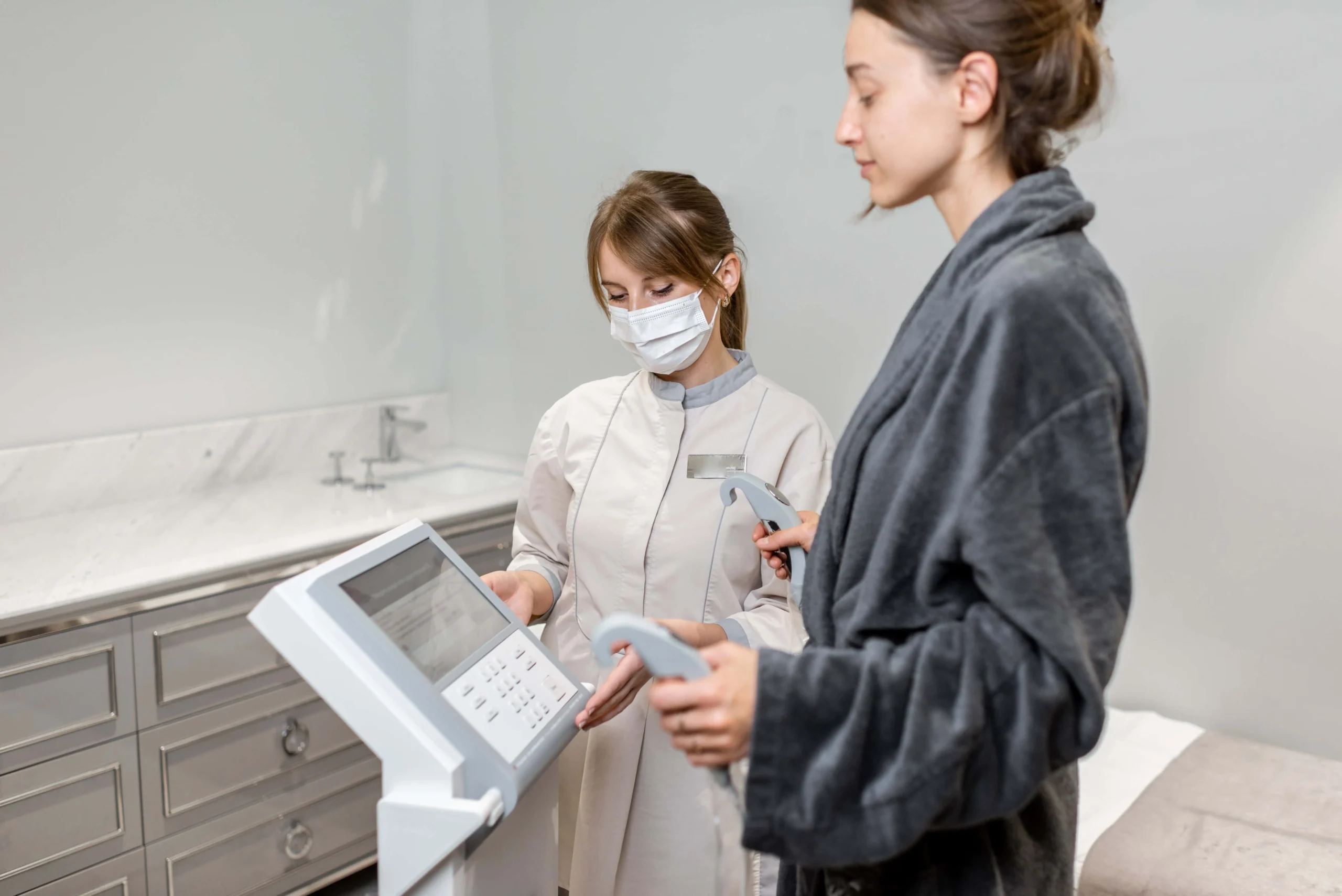
The InBody 570 is a medical-grade body composition analyzer that uses multi-frequency bioelectrical impedance analysis (BIA) to estimate body composition.
During the scan, a low-level electrical current travels through the body. Because muscle, fat, and body water conduct electricity differently, the device can estimate several important measurements, including:
The scan is completely non-invasive, takes about one minute, and does not expose patients to radiation.
DEXA stands for Dual-Energy X-ray Absorptiometry.
It was originally developed to evaluate bone mineral density and remains one of the most widely used tests for diagnosing osteoporosis and assessing fracture risk.
Many DEXA systems can also estimate body composition by measuring fat mass and lean tissue distribution throughout the body.
The scan typically takes several minutes and uses a very small amount of X-ray radiation.
Although the radiation exposure is low, it is still an imaging study and is not typically performed as frequently as an InBody Scan for routine progress monitoring.
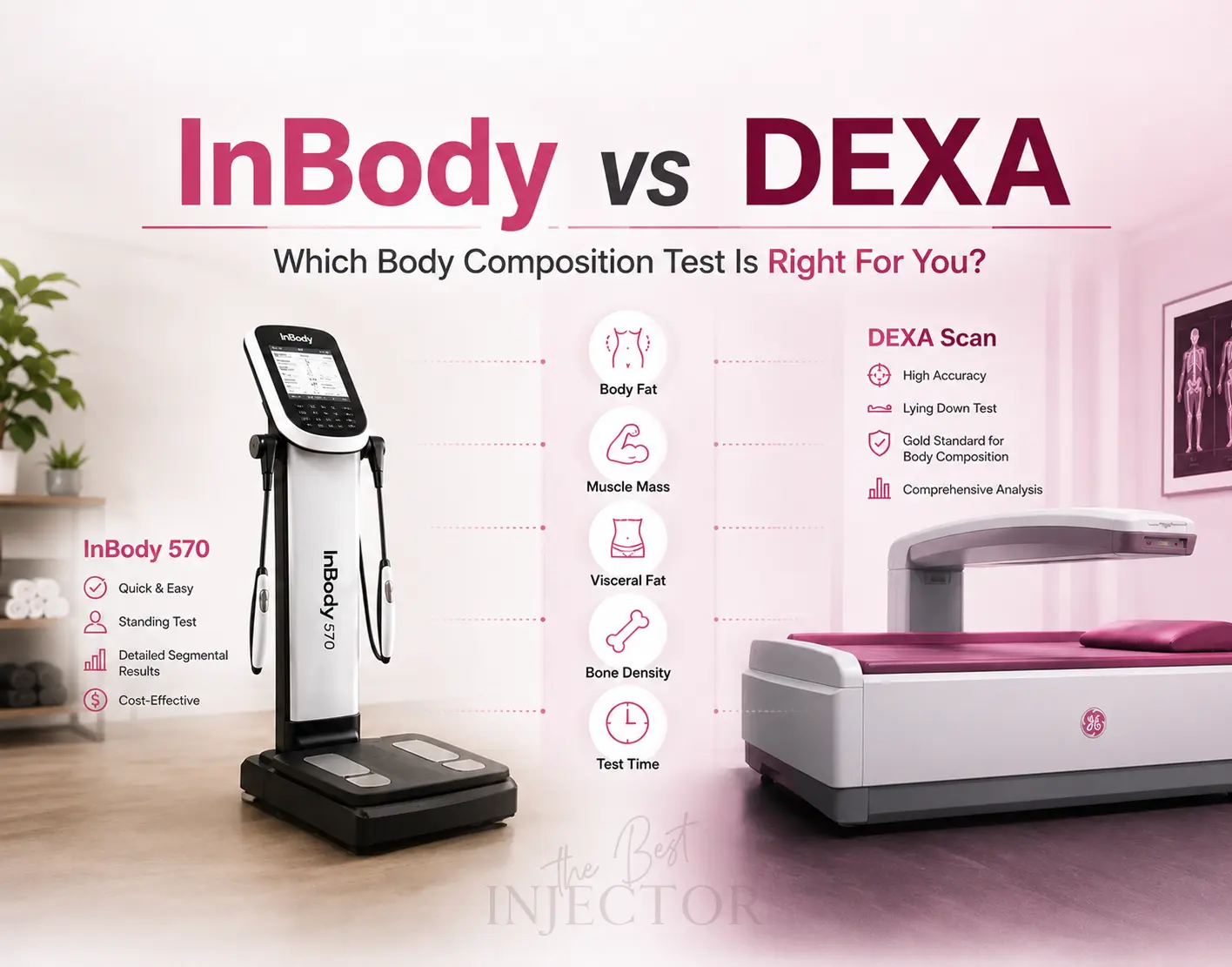
Although both tests provide body composition information, they use completely different technologies.
Because the technologies differ, the exact numerical values reported by each test may not always match perfectly.
However, both can provide useful information when interpreted appropriately.
| Measurement | InBody 570 | DEXA |
|---|---|---|
| Body fat percentage | ✓ | ✓ |
| Lean body mass | ✓ | ✓ |
| Skeletal muscle estimates | ✓ | Partial |
| Segmental analysis | ✓ | ✓ |
| Bone mineral density | ✗ | ✓ |
| Body water | ✓ | ✗ |
| Basal metabolic rate estimate | ✓ | ✗ |
| Visceral fat estimate | ✓ | Limited depending on system |
For patients participating in a medical weight loss program, frequent monitoring is often more valuable than obtaining a single highly detailed measurement.
An InBody Scan offers several practical advantages:
Because the scan can be repeated regularly, patients and providers can monitor trends in body fat, muscle preservation, and overall body composition throughout treatment.
This is where DEXA has a clear advantage.
DEXA is the preferred test for evaluating:
If your physician is evaluating bone health, a DEXA scan is the appropriate study.
An InBody Scan is not designed to diagnose bone disease or measure bone mineral density.
This is one of the most common questions patients ask, but there isn’t a single answer that applies to everyone.
Both the InBody 570 and DEXA are well-established methods for assessing body composition. However, because they use different technologies, the measurements they produce are not expected to be identical.
Small differences in body fat percentage or lean mass estimates can occur between the two tests. These differences do not necessarily mean that one test is “right” and the other is “wrong.” They simply reflect different measurement methods and calculation models.
For most patients, the most valuable information comes from tracking consistent trends over time, rather than comparing individual numbers obtained from different technologies.
For example, if your body fat percentage steadily decreases while your skeletal muscle mass remains stable on repeat InBody Scans, that trend provides meaningful insight into your progress regardless of how the numbers might compare with another testing method.
One of the biggest advantages of the InBody 570 is that it is designed to be repeated frequently.
Unlike imaging studies, an InBody Scan:
This makes it particularly useful for patients who want to monitor how their body changes over time rather than simply obtaining a single snapshot.
For example, patients participating in our medical weight loss program often complete periodic InBody Scans to monitor:
Tracking these measurements allows treatment recommendations to become more personalized as your body changes.
The answer depends on your goals.
For many people, these tests are not competing options. They answer different clinical questions and can be complementary depending on the situation.

| Feature | InBody 570 | DEXA |
|---|---|---|
| Measures body fat | ✓ | ✓ |
| Measures lean body mass | ✓ | ✓ |
| Estimates skeletal muscle | ✓ | Limited |
| Body water analysis | ✓ | ✗ |
| Basal metabolic rate estimate | ✓ | ✗ |
| Visceral fat estimate | ✓ | Some systems |
| Bone mineral density | ✗ | ✓ |
| Radiation exposure | None | Low-dose X-ray |
| Test time | ~1 minute | Several minutes |
| Repeat testing | Easy | Less commonly repeated |
| Immediate results | ✓ | Usually yes |
| Ideal for routine progress monitoring | ✓ | Less commonly used for this purpose |

Many people become discouraged when the scale doesn’t move as quickly as expected.
However, your body can improve significantly even when your weight changes very little.
For example, imagine a patient who:
The scale only shows a two-pound loss.
Without body composition testing, that patient might believe they made very little progress.
In reality, they improved their body composition substantially.
This is why body composition often provides a much more meaningful measure of success than body weight alone.
For many patients, yes. The InBody 570 provides detailed information about body fat percentage, skeletal muscle mass, lean body mass, body water, and other measurements that help monitor changes throughout a weight loss program.
Some patients may benefit from both depending on their goals. For example, someone monitoring osteoporosis may need a DEXA scan for bone density, while also using periodic InBody Scans to follow changes in body composition during medical weight loss or fitness training.
Not always. These tests serve different purposes. An InBody Scan is not intended to diagnose osteoporosis or evaluate bone mineral density. If your healthcare provider recommends a DEXA scan for bone health, that recommendation should be followed.
Many patients repeat their InBody Scan every four to eight weeks during medical weight loss or fitness programs to monitor trends in body composition.
Yes. The InBody 570 provides an estimate of visceral fat, which is the fat surrounding the internal abdominal organs. Elevated visceral fat has been associated with increased cardiometabolic risk.
Athletes often benefit from routine InBody Scans because they can monitor skeletal muscle mass, body fat percentage, hydration, and segmental muscle distribution throughout training.
Patients using semaglutide or tirzepatide often benefit from regular InBody Scans because they can monitor whether weight loss is coming primarily from body fat while helping identify changes in lean body mass over time.
Both the InBody 570 and DEXA provide valuable information about body composition.
Rather than asking which test is universally “better,” it’s more helpful to ask which test best aligns with your individual goals.
If your primary goal is evaluating bone density or osteoporosis, a DEXA scan is the appropriate choice.
If your goal is routinely monitoring body composition during medical weight loss, fitness training, or lifestyle changes, the InBody 570 offers practical advantages that make frequent progress tracking simple and convenient.
At The Best Injector, we use the InBody 570 because it allows our patients to look beyond the number on the scale and better understand how their bodies are changing over time.
Whether you’re beginning a medical weight loss program, taking semaglutide or tirzepatide, or simply looking for a more complete picture of your health, an InBody Scan can provide meaningful insight into your progress.
Schedule your consultation today to learn how body composition analysis with the InBody 570 can help guide your wellness journey.
Lianne helps patients understand how the accessibility and repeatability of InBody 570 testing differ from DEXA so they can choose the measurement approach that fits their clinical goals.