
 Skip to content
If you’re trying to lose fat, build muscle, or understand what’s actually happening to your body during a medical weight loss program, the number on your bathroom scale only tells part of the story.
An InBody 570 body composition scan provides a much more detailed look at your body—including body fat, skeletal muscle, visceral fat, and body water.
One of the most common questions patients have before scheduling is simple:
How much does an InBody scan cost in Delray Beach?
The cost of an InBody scan can vary depending on the facility, the type of InBody device being used, whether interpretation is included, and whether testing is part of a larger medical weight loss or wellness program.
At The Best Injector in Delray Beach, Florida, we use the InBody 570 to provide detailed body composition analysis for patients throughout Delray Beach, Boca Raton, Boynton Beach, Highland Beach, and surrounding Palm Beach County communities.
Rather than focusing exclusively on the cost of a scan, it’s worth understanding exactly what you’re measuring—and why that information can be so valuable.
The InBody 570 is a body composition analyzer that uses multi-frequency bioelectrical impedance analysis to estimate different components of your body rather than simply measuring total weight.
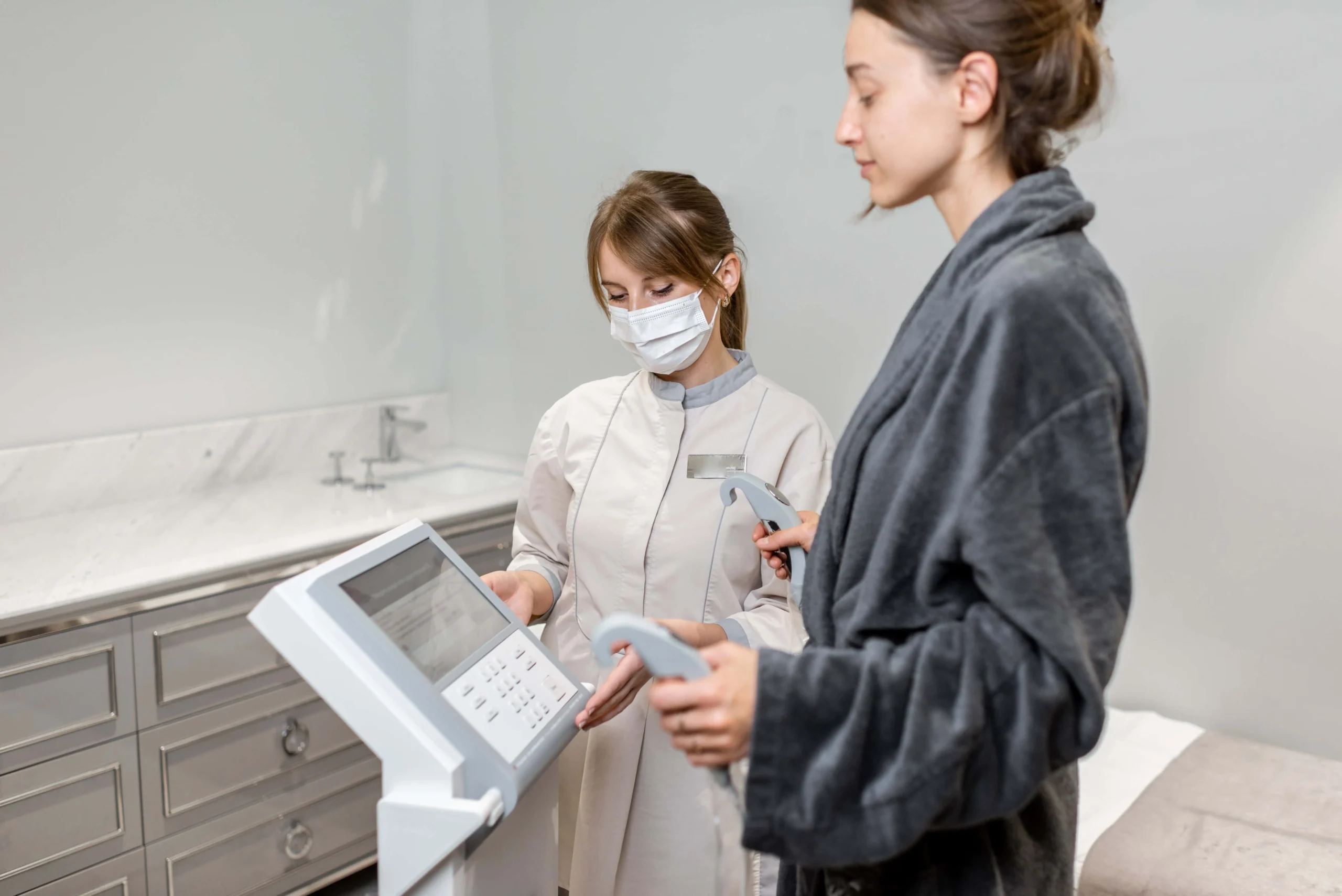
During the test, you stand barefoot on the device and hold its hand electrodes while measurements are taken.
There are no needles, no radiation, and no painful procedures.
Within a short period of time, the InBody 570 provides a detailed body composition analysis that can be used to establish a baseline and monitor changes over time.
An InBody 570 assessment provides considerably more information than a traditional bathroom scale.
Your results may include measurements and estimates such as:
Looking at these measurements together provides a much more complete picture of body composition than body weight alone.
Pricing for an InBody scan in Delray Beach varies depending on where testing is performed and what is included with the assessment.
Some facilities offer a simple standalone scan, while medical practices may incorporate body composition testing into a broader weight management or wellness program.
At The Best Injector, current InBody 570 pricing can be confirmed when scheduling your appointment.
If you’re already participating in one of our medical weight management programs, ask whether body composition testing is included or recommended as part of your ongoing monitoring.
The more important question isn’t necessarily:
“Where can I find the cheapest InBody scan?”
It’s:
“Am I getting useful information from the scan, and do I understand what those numbers actually mean?”
A body composition report becomes considerably more valuable when the information is interpreted in the context of your actual goals.
A traditional scale tells you your total body weight.
That’s it.
If you lose ten pounds, the scale cannot tell you whether those ten pounds came primarily from:
That distinction can be extremely important.
Imagine two patients who each lose 20 pounds.
One loses predominantly body fat while maintaining most of their skeletal muscle.
The other loses significant amounts of both fat and muscle.
A bathroom scale tells both patients that they lost 20 pounds.
From a body-composition standpoint, however, those are very different results.
This is one reason we emphasize body composition rather than scale weight alone.
Body composition monitoring can be particularly useful for patients undergoing medical weight loss with semaglutide, tirzepatide, or other GLP-1 medications.
These medications can significantly reduce appetite and food intake in appropriate patients.
While weight reduction may be the goal, we don’t want to focus exclusively on how quickly the scale drops.
Significant weight loss can include loss of both body fat and lean tissue.
That means an important question during GLP-1 treatment is:
What kind of weight are you losing?
Regular body composition assessments can help provide additional context about changes in body fat and skeletal muscle throughout treatment.
If body weight is decreasing but skeletal muscle is also declining substantially, that information may prompt a closer look at nutrition, protein intake, resistance training, rate of weight loss, and the overall treatment strategy.
The goal isn’t simply to become lighter.
The goal is to improve body composition while preserving as much valuable lean tissue as reasonably possible.
Skeletal muscle becomes increasingly important as we age.
Muscle contributes to strength, physical function, body composition, energy expenditure, and healthy aging.
This becomes especially relevant for adults losing significant amounts of weight and for patients over 40.
If someone focuses exclusively on achieving the lowest possible number on the scale, meaningful loss of lean mass can be overlooked.
That’s why adequate protein intake, appropriate nutrition, and resistance training may be important components of a comprehensive medical weight-management strategy.
An InBody scan gives us another way to monitor whether the composition of your body is moving in the direction we want.
One of the measurements patients frequently ask about is visceral fat.
Visceral fat is fat located deeper within the abdomen around internal organs.
It is different from subcutaneous fat, which is the fat located beneath the skin.
Higher amounts of visceral adiposity are associated with increased cardiometabolic risk.
This is one reason changes in visceral fat can provide useful information beyond appearance or total body weight.
Someone may be primarily focused on looking better in clothing or reducing their waistline, while body composition testing provides additional insight into changes occurring beneath the surface.
Consumer smart scales can be convenient for monitoring trends at home.
However, they are not the same as an InBody 570 body composition assessment.
The InBody 570 uses multiple frequencies and measurements through both the hands and feet to provide segmental body-composition analysis.
This provides considerably more information than simply seeing weight and an estimated body-fat percentage on a home scale.
A home scale can still be useful for tracking weight trends.
An InBody assessment answers a different question:
What is your body actually composed of, and how is that composition changing?
DEXA and InBody testing are different methods of assessing body composition.
A DEXA scan uses low-dose X-ray technology and can provide detailed information about body composition and bone mineral density.
The InBody 570 uses bioelectrical impedance and does not involve radiation.
InBody testing is quick, non-invasive, and convenient for repeated body composition monitoring.
DEXA may be appropriate when bone density or a different type of body composition assessment is clinically needed.
For patients primarily interested in monitoring changes in fat and muscle during weight loss, fitness, or body recomposition, InBody testing offers a convenient option that can be repeated over time.
There isn’t one testing schedule that is appropriate for everyone.
If you’re simply curious about your body composition, a single scan can provide a useful baseline.
If you’re actively losing weight, building muscle, or undergoing a medical weight-management program, repeating your scan periodically can provide considerably more useful information.
The value comes from comparing results over time.
For example, if you’ve lost eight pounds since your previous assessment, the next scan may help show whether those changes were predominantly associated with body fat, lean mass, or body water.
Testing too frequently can also create unnecessary noise because hydration and other variables can affect bioelectrical impedance measurements.
Consistency is more useful than obsession.
For the most useful comparisons, try to perform repeat InBody assessments under similar conditions.
Hydration, food intake, exercise, and time of day can influence bioelectrical impedance measurements.
You may be instructed to:
The goal is consistency.
If your first scan occurs under dramatically different conditions than your second, some of the difference may reflect hydration rather than a true change in body composition.
Body composition becomes particularly relevant for adults over 40.
As we age, maintaining skeletal muscle becomes increasingly important.
Women navigating perimenopause and menopause may also notice changes in body-fat distribution and body composition even when the number on the scale hasn’t changed dramatically.
Men can experience changes in lean mass and visceral abdominal fat with age as well.
For these patients, focusing exclusively on body weight can miss important changes.
Body composition testing can help shift the goal from:
“How little can I weigh?”
to:
“How much fat am I carrying, how much muscle am I maintaining, and is my body composition improving?”
That’s a much more useful conversation.
Yes—particularly when the scale appears to have stopped moving.
A weight loss plateau does not necessarily mean that no progress is occurring.
Changes in body water can temporarily mask fat loss. In other situations, someone incorporating resistance training may be maintaining or gaining lean mass while losing body fat.
Conversely, a rapidly declining scale isn’t automatically evidence of an ideal result if a meaningful amount of the loss is coming from lean tissue.
Body composition data provides additional context.
If you’ve stopped losing weight while taking semaglutide or tirzepatide, an InBody assessment may therefore be one part of evaluating what is actually happening before automatically assuming your medication needs to be increased.
The Best Injector offers InBody 570 body composition testing in Delray Beach, Florida.
Our approach is particularly useful for patients who want more information than a traditional scale can provide.
Whether you’re:
an InBody 570 assessment can provide a useful baseline and objective measurements to track over time.
If you’re searching for an InBody scan in Boca Raton or an InBody 570 near Boca Raton, The Best Injector is conveniently located nearby in Delray Beach, Florida.
We serve patients throughout Boca Raton, Delray Beach, Boynton Beach, Highland Beach, Gulf Stream, and surrounding Palm Beach County communities.
For Boca Raton patients participating in medical weight management or using semaglutide or tirzepatide, body composition testing can provide additional information about changes in fat and lean mass throughout treatment.
You do not need to be enrolled in a GLP-1 program simply to benefit from understanding your body composition.
The cost of an InBody scan varies by facility and according to what is included with the assessment. The Best Injector offers InBody 570 body composition testing in Delray Beach, Florida. Contact our office for current standalone pricing and information about testing associated with medical weight-management programs.
The Best Injector offers InBody 570 body composition testing at our Delray Beach, Florida office for patients interested in assessing body fat, skeletal muscle, visceral fat, and other body-composition measurements.
The Best Injector is located in Delray Beach, convenient to Boca Raton and southern Palm Beach County. Patients searching for an InBody scan near Boca Raton can schedule body composition testing at our Delray Beach office.
The InBody 570 provides body-composition information including body fat mass, percent body fat, skeletal muscle mass, body water, segmental lean analysis, visceral fat level, and additional measurements.
The measurement itself is quick and non-invasive. Additional time may be spent reviewing and understanding your body-composition results.
No. There are no needles or invasive procedures involved. You stand barefoot on the analyzer and hold the hand electrodes while measurements are taken.
No. DEXA uses low-dose X-ray technology, while the InBody 570 uses bioelectrical impedance analysis. Each has different applications and advantages.
Body composition testing can provide useful information during significant weight loss because it allows you and your provider to look beyond total scale weight and assess changes in body fat and skeletal muscle.
Frequency depends on your goals. Patients actively working on weight loss or body recomposition may benefit from periodic testing rather than relying on a single baseline measurement.
Weight matters.
But what that weight consists of matters too.
If you’re trying to lose fat, preserve muscle, improve your body composition, or understand whether your current weight-management strategy is producing the type of progress you want, an InBody 570 assessment can provide information that a traditional scale cannot.
Schedule an InBody 570 body composition scan at The Best Injector in Delray Beach, Florida.
Our Delray Beach office is convenient to patients throughout Boca Raton, Boynton Beach, Highland Beach, Gulf Stream, and surrounding Palm Beach County.
Lianne uses InBody 570 testing to give patients objective body-composition information that can add meaningful context to the cost of monitoring weight-management or fitness progress.
Lianne Hahn, PA-C is an NCCPA board-certified Physician Assistant and founder of The Best Injector, a boutique medical aesthetics and wellness practice in Delray Beach, Florida. With more than 13 years of clinical experience across aesthetics, dermatology, primary care, medical weight management, and wellness, Lianne combines advanced clinical knowledge with an individualized approach to patient care.
At The Best Injector, Lianne personally evaluates and treats patients from Delray Beach, Boca Raton, Palm Beach County, and throughout South Florida. Her practice offers advanced injectable aesthetics, facial balancing, medical weight management, GLP-1 treatment when clinically appropriate, InBody 570 body composition analysis, microneedling, regenerative treatments, and personalized wellness services.
Lianne’s approach emphasizes appropriate patient selection, individualized treatment planning, natural-looking aesthetic outcomes, and evidence-informed medical care rather than one-size-fits-all treatment protocols.
Author & Medical Reviewer: Lianne Hahn, PA-C
Credentials: NCCPA Board-Certified Physician Assistant
Clinical Experience: 13+ Years
Practice: The Best Injector | Delray Beach, Florida
Serving: Delray Beach, Boca Raton & South Florida
If you’re considering aesthetic treatment, medical weight management, body composition analysis, or wellness services in Delray Beach or Boca Raton, schedule a personalized consultation with Lianne Hahn, PA-C at The Best Injector to determine which treatment options may be appropriate for your individual goals.
This article is intended for educational purposes only and does not replace individualized medical evaluation, diagnosis, or treatment. Treatment eligibility, recommendations, risks, and expected outcomes vary by patient.