 Skip to content

Facial balancing has become one of the most talked-about concepts in aesthetic medicine, but the term is often misunderstood.
It does not simply mean adding filler to several areas of the face.
True facial balancing begins with evaluating how individual features relate to one another—including the lips, chin, cheeks, jawline, profile, and overall facial proportions.
The objective is not to create a different face.
It is to identify which features, if any, may benefit from subtle adjustment so the face appears more harmonious as a whole.
At The Best Injector in Delray Beach, Lianne Hahn, PA-C approaches facial balancing through individualized assessment rather than predetermined filler packages or a standard number of syringes.
Here are the most important things to consider when choosing a facial balancing injector.
A strong facial balancing consultation should not begin with a syringe count.
It should begin with understanding the face.
The provider should evaluate:
This full-face assessment helps determine whether treatment is appropriate and which areas, if any, should be prioritized.
Sometimes the area a patient notices first is not the only feature influencing the overall balance of the face.
A face can be attractive without matching a mathematical formula.
Facial balancing is not about forcing every patient into the same set of proportions.
Instead, it involves understanding how the patient’s natural features relate to one another.
For example, the appearance of the lips may be influenced by chin projection.
Jawline definition may be affected by chin shape, lower-face volume, or surrounding soft tissue.
The cheeks influence how the midface transitions into the lower face.
This is why treating one feature without considering the rest of the face can sometimes create imbalance rather than improve it.
Facial balancing should not be defined by the number of syringes used.
A thoughtful plan may involve treating one area, several areas, or sometimes no filler at all.
The amount of product required depends on the patient’s anatomy, degree of volume loss, skeletal structure, previous filler, tissue characteristics, and desired result.
Using more product simply because multiple areas are being discussed can create heaviness or change the face beyond what the patient intended.
A good injector should be comfortable recommending less when less is more appropriate.
The goal of facial balancing should not be to make every patient look alike.
Natural-looking results preserve individuality.
A strong treatment plan should respect:
The result should still look like the same person.
The difference should be improved proportion, harmony, or definition rather than an obviously “filled” appearance.
The chin plays an important role in both the frontal and profile views of the face.
A relatively retrusive or short chin can make the lower face appear less defined and may influence how the lips, nose, and jawline are perceived.
In appropriate patients, chin filler can improve projection, length, contour, or symmetry.
The goal is not to create an oversized or overly angular chin.
It is to improve the relationship between the lower face and surrounding features.
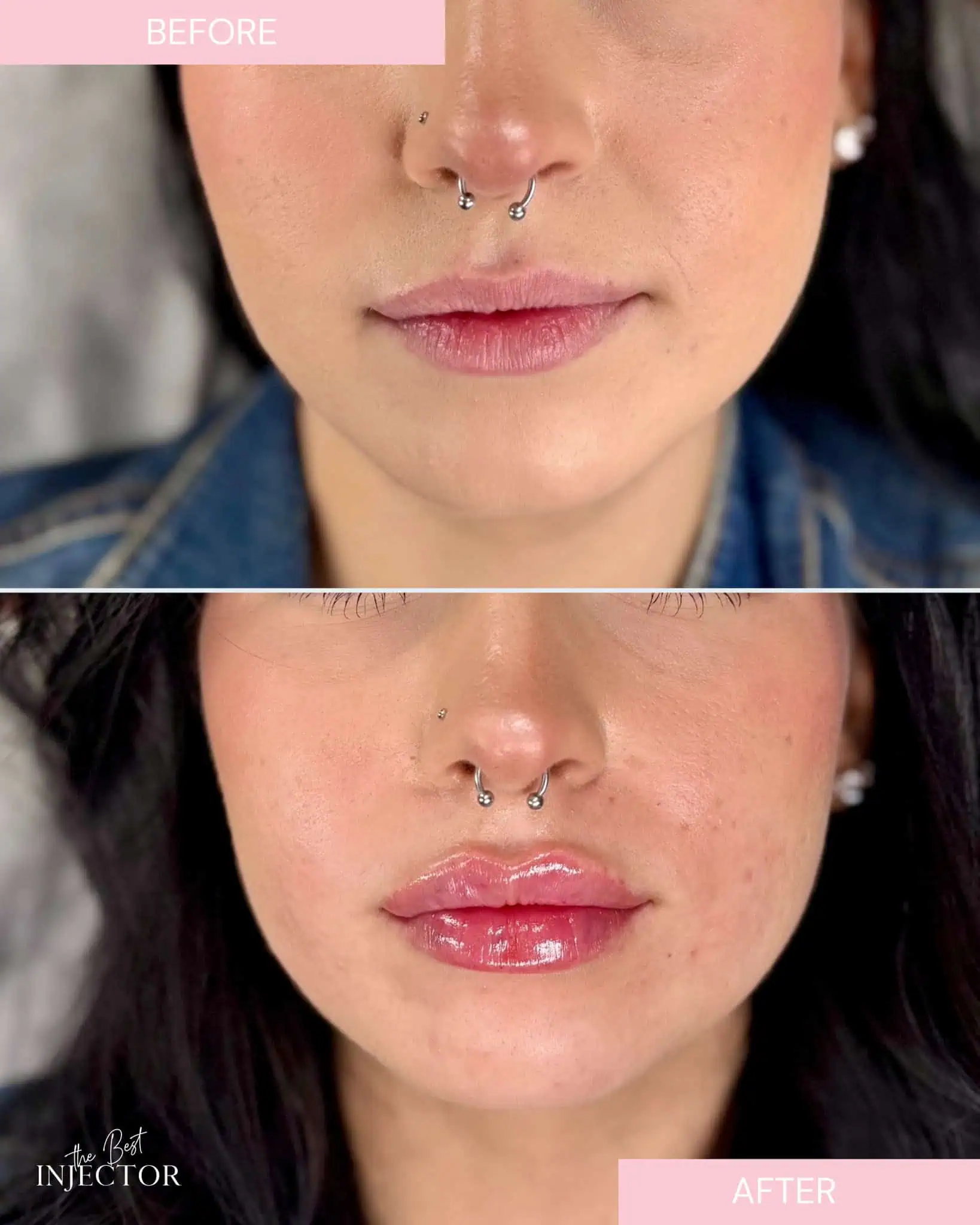
Lip enhancement can be beautiful on its own, but lip volume should still make sense in the context of the entire face.
Increasing lip projection or volume without considering the chin, profile, dental support, or surrounding proportions can sometimes create a result that feels disproportionate.
For this reason, an injector performing facial balancing should be able to evaluate whether the lips truly need more volume—or whether another feature may be contributing more to the patient’s concern.
Cheek filler can be useful in appropriate patients, but it should not be a mandatory step in every facial balancing plan.
Some patients benefit from additional midface support or contour.
Others already have strong cheek structure and do not need additional volume.
Age-related volume change, facial width, skeletal structure, and existing filler all influence whether cheek treatment is appropriate.
A customized plan should treat the patient’s actual anatomy rather than follow a routine formula.
Jawline treatment may involve several anatomical considerations.
Chin projection, mandibular structure, prejowl volume, soft tissue, skin laxity, and masseter prominence can all influence the appearance of the lower face.
For some patients, jawline filler may improve contour and definition.
For others, treating the chin or another area may have a greater impact.
A thoughtful injector should be able to explain why a particular treatment is being recommended rather than automatically injecting along the entire jawline.
Many patients seeking facial balancing have been treated elsewhere previously.
Existing filler can influence:
Adding more product without first understanding what is already present can compound an existing imbalance.
Sometimes additional filler is appropriate.
In other cases, modifying the plan or addressing previous filler may produce a better result.
When reviewing a facial balancing injector’s portfolio, do not look only for dramatic transformations.
Look for variety.
A strong portfolio should show that different patients receive different treatment plans.
Ask yourself:
Do the patients still look like themselves?
Are the results proportional to each individual face?
Does the injector show restraint?
Do younger and older patients receive different-looking treatments?
Are results demonstrated from multiple angles when appropriate?
If every patient receives the same cheek shape, jawline, lips, or chin, the approach may be more standardized than individualized.


These terms are sometimes used interchangeably, but they do not need to mean the same thing.
Facial balancing is an assessment philosophy.
It means evaluating the face as a whole before deciding what treatment, if any, would improve proportion or harmony.
A patient may achieve meaningful facial balancing with treatment to one or two strategically selected areas.
Another patient may benefit from several areas treated gradually over time.
The number of syringes should not define the quality of the treatment plan.
Not every facial balancing plan should be completed in one appointment.
Staging treatment can allow the provider and patient to evaluate changes gradually and decide whether additional treatment is actually necessary.
This can be particularly valuable when:
A staged approach can help preserve control over the final result.
One of the most important signs of a thoughtful aesthetic provider is the willingness to recommend against treatment when it is unlikely to improve the face.
That may mean:
A provider should not automatically agree with every requested treatment simply because it can technically be performed.
The objective should be a better result—not more product.
A facial balancing consultation should involve a comprehensive assessment rather than focusing only on the feature the patient initially mentions.
At The Best Injector, consultation may include evaluation of:
From there, an individualized plan can be developed.
The recommendation may involve dermal filler, neuromodulator treatment, biostimulatory treatment, another modality, or no treatment at all.
Look for a provider who combines:
The right provider should be able to explain not only what they recommend—but why.
At The Best Injector, facial balancing begins with understanding the patient’s existing anatomy rather than deciding in advance how many areas should be treated.
Lianne Hahn, PA-C is an NCCPA board-certified Physician Assistant with more than a decade of experience across medical aesthetics, dermatology, primary care, wellness, and medical weight management.
Treatment plans are individualized based on facial proportions, profile, symmetry, existing filler, treatment history, and the patient’s aesthetic goals.
The Best Injector provides private, appointment-based aesthetic care in Delray Beach for patients from Boca Raton and surrounding South Florida communities.
Facial balancing is an approach to aesthetic treatment that evaluates how facial features relate to one another before recommending treatment. The goal is to improve proportion and harmony while preserving the patient’s individual appearance.
No. Facial balancing is an assessment philosophy rather than a specific filler package. Depending on the patient, treatment may involve filler, neuromodulators, another treatment modality, or no injectable treatment.
There is no universal number. The amount of product depends on the patient’s anatomy, treatment goals, areas being addressed, previous filler, and desired degree of change.
Depending on anatomy and treatment goals, facial balancing may involve areas such as the chin, cheeks, lips, jawline, or other facial features. Not every patient needs every area treated.
Yes. Natural-looking facial balancing should preserve the patient’s individual features while improving proportion or harmony. Treatment should not make every patient look the same.
Not necessarily. Facial balancing involves evaluating the entire face, but treatment may involve only one or two strategically selected areas. It does not automatically mean injecting the entire face.
The Best Injector provides individualized facial balancing consultations in Delray Beach for patients from Boca Raton and surrounding South Florida communities. Treatment begins with a full-face assessment of anatomy, proportions, previous treatment, and aesthetic goals.
Medical Disclaimer: This article is for educational purposes only and does not provide individualized medical advice. Injectable treatment should be performed only after appropriate evaluation by a qualified medical provider. Treatment recommendations, risks, and results vary by patient.
Lianne approaches facial balancing with detailed anatomical assessment, conservative product selection, and a plan designed to enhance proportion without erasing the patient’s natural features.